2011年1月25日星期二

Authorities Fear Cops Being Targeted After at Least 11 Officers Shot in 24 Hours

global business, B2B Global B2B buy sell website: www.bytrade.com


Jan. 24: St. Petersburg Police Chief Chuck Harmon talks on a cell phone as he walks from the scene where a U.S. Marshal and two St. Petersburg police officers were shot while trying to serve an arrest warrant in St. Petersburg, Fla. (AP)Authorities are worried a recent wave of police officer shootings may not be a coincidence.


In just 24 hours, at least 11 cops were shot around the country.


The most recent incident at a fugitive's house in St. Petersburg, Fla., left two officers dead and a U.S. marshal wounded Monday. Hours earlier, an Oregon officer was critically wounded after being shot multiple times during a traffic stop. 


Monday's violence followed a bloody Sunday that left an officer in Indianapolis critically wounded during a traffic stop shooting, four officers in Indianapolis wounded after a gunman opened fire in a precinct and two more officers in Washington wounded in a shootout in a Walmart parking lot.


"It's not a fluke," Richard Roberts, a spokesman for the International Union of Police Associations, told MSNBC.com. "There's a perception among officers in the field that there’s a war on cops going on."


Florida officers Tom Baitinger and Jeffrey Yaslowitz were killed Monday when agents tried to arrest 39-year-old Hydra Lacy Jr. on an aggravated battery charge. Police believe Lacy opened fire on the agents, also injuring an U.S. marshal.


Lacy, who was found dead at home following an hour-long standoff, had a long and violent criminal record including a sexual battery conviction.


In Oregon, a gunman is still on the loose after shooting officer Steven Dodds, 45, during a traffic stop Monday. Police say the gunman, driving a 1984 Dodge truck, led police on a chase after the shooting and fired several shots at officers but missed, before being stopped by spike strips and escaping on foot into a wooded area. He is described as armed and extremely dangerous.


Indianapolis Police Chief Paul Ciesielski says he believes 60-year-old Thomas Hardy is the man who shot officer David Moore twice in the face and in his chest and leg during a traffic stop Sunday, critically wounding Moore.


The Indiana Department of Correction says Hardy had a criminal history dating back to at least 1984, when he was sentenced to 13 years in prison on a burglary conviction. He was released on parole in 1990, but has been in and out of prison since then on various charges, including seven sentences for theft, one for cocaine possession and one for misdemeanor battery.


Detectives in Port Orchard, Wash., are investigating why a man ran from deputies and then opened fire in a Walmart parking lot Sunday, sparking a shootout that left him and the woman he apparently was with dead and two officers wounded.


The Kitsap County Sheriff's deputies were answering a call about a suspicious person at the store. When they located the man and tried talking to him he ran, then opened fire as the officers followed.


Both men were hit and unable to return gunfire, but a female officer arriving on the scene shot and killed the gunman, sheriff's spokesman Scott Wilson said. Authorities said it wasn't immediately known who shot the woman, who died later at a Tacoma hospital.


And in Detroit, 38-year-old Lamar D. Moore was fatally shot after opening fire at a police station, wounding the precinct commander, two sergeants and an officer the day before a family spokesman said his brother was to be sentenced in a double-homicide case.


"There's nothing in this that makes sense at all," Police Chief Ralph Godbee told reporters during a briefing on the case.


While all the shootings don’t appear to be connected, Roberts says they have one thing in common.


"We don't have any data, but there seems to be a type of criminal out there looking to thwart authority," he told the station.


According to National Law Enforcement Officers Memorial Fund, an organization that tracks police casualties, there have already been as many officer deaths in January 2011 as there were in January of last year. The organization reported that officer deaths were up 43 percent in 2010 compared to 2009.


marble tile, granite tile, stone carving

Marketing to Teens Without Showing Too Much 'Skin'

B2B ,trade marketplace Global B2B buy sell website: www.bytrade.com


By Kate Rogers


1 MTV is in hot water with some advertisers and parenting groups over one of its newest dramas. When marketing your business to teens, should you be cautious of showing too much “skin?”


MTV is no stranger to controversy over its choice of programming, from a series on expectant teens to one that follows a rowdy and party-hungry group of “Jersey Shore” twenty-somethings on their summer break, the network has had many successes turning this risqué and live-reality television into profits from advertisers. But some say its latest drama “Skins,” which covers with visual footage the sex lives of teens aged as young as 15, is going too far. Advertisers have been pulling out by the day, including Subway and Taco Bell, and some critics say the show itself may be in violation of child pornography laws.


Matt Britton, CEO and founder of Mr. Youth, a marketing agency, said while MTV has always aimed for controversy with its programming, this latest attempt at going for shock value may be alienating its advertising base.  But he said that is a decision to be made regarding what's best for business, and not based on a moral issue, as ultimately it comes down to parents, not advertisers, to police what content teens are exposed to.


“It’s more of a parental issue than an MTV issue,” Britton said. “Young people will have access to content that is not wholesome in a variety of sources. Parents need to raise their kids and let them know they will have access to information like that, and if brands don’t want to associate, the market will really determine if they can make a viable business model out of that.”


MTV is only doing what has come naturally to it over the network’s evolution, according to Cliff Courtney, chief strategy officer at Zimmerman Advertising. Since the days of the “Real World” in the 1990s, MTV has marketed to teens through scandal and controversy.


“The object of programming is to tell a good story, and at the heart of every great story there is conflict,” Courtney said. “MTV had to up the ante in salacious content. But, I will say that “Teen Mom” does come across as much more of a cautionary tale.”


However, getting through to teens doesn’t necessarily need to involve sex, drugs and early pregnancy. Here are some strategies from marketing experts on how to efficiently target teenagers.


No. 1: Be authentic. Most teens can see right through businesses pretending to be something they are not, and they don’t like it. “Teens are very savvy,” Britton said.


“They can sniff out brands that are trying to manufacture cool, and they will call you out on it.” Courtney agreed, adding, “This audience has the most acute BS-meter of all time. They were raised in the culture of 4,000 messages a day and 500 channels on T.V.”


No. 2: Be a collaborator brand. Small businesses can utilize social media tools like Facebook and Twitter to ask teens to put in their two cents as to where products or service are headed. Britton said teens respond well to brands that care about their opinion.


“Have them contribute their input on what the logo should look like, or what product should be sold next in stores,” he said. “They will say, “that brand is really listening to me.’”


No. 3: Teens have all the answers. Or at least they think they do, and businesses need to play into this belief.


“We know wisdom is accumulated through time, but you have to respect that they can believe that,” Courtney said. Instead of trying to teach teens something, market to them as if they already know it.


No. 4: Provide utility. Teens are attracted to products, services and stores that provide utility to their own lives, Britton said. He cited the energy drink industry as an example, because they are marketing efficiently to teens on the go.


“They show teens they can accomplish something, and keep going, by using their product,” he said.


No. 5: Know what they want. Teens aspire to fit in, be popular and be admired by their peers, Courtney said, and businesses need to remember that when marketing.


“Their aspiration is to be the thing that puts you in with the peer group,” he said. “No one aspires to be an outcast… although some embrace the role when it is thrust upon them.”


 buying, sellingpurchase ,marketplace

How Small-Business Owners Can Prevent a Cyber Attack

B2B ,trade manufacturers , Global B2B buy sell website: www.bytrade.com


By Cindy Vanegas


A cyber attack, whether it's loss of customer data, corrupted hardware, or loss of access to online files and software programs, can cripple a business' operations.  


Most often we hear of corporate giants becoming victims of cyber attacks. But small businesses are just as susceptible and often underprepared to handle such attacks. A study by Internet security software company AVG Technologies, found that 52% of small business owners polled don't have an IT security policy. 


So what can a small business owner do to prevent a cyber attack? We asked leading online security experts from around the country and here's what they had to say:


Invest in Your Technology


When it comes to protecting your business, it's better to play offense. 


Spend time acknowledging what type of protection you need. Ask yourself, are you just using workstations or do you have remote employees? Are you using file servers and e-mail servers? Make sure the technology protection you are using matches the network your business is running. Often, businesses protect their laptops and PCs, but their file servers or e-mail servers don't have protection.  


Consider how Internet active the business is. Do you have online customer data? Do you enable online transactions? If so, consider higher-end protection like Internet security as opposed to simple anti-virus.


Protect remote workers. If you have a lot of remote workers who dial in, consider having firewalls on laptops and PCs.


If you are hiring an outside IT security company, look at business testimonials. Sometimes when business owners speak to consultants, they don't understand the technicalities being explained, so they should ask for references, credentials, awards and certifications. 


Create a Company Policy


Not all attacks occur from outside the building, it can just as easily be a disgruntled employee.


Tim Hogan, Elite Services consultant at Alper Services, recommended:


•Create a risk assessment team that will determine who needs access to what within the company. That will help you figure out where logins and extra security are required. 


•Put controls in place for physical assets. Are laptops locked up every night or can they just be popped out of the docking stations? Do your employees know not to leave a laptop in the backseat of a car? Do you have a policy for what can go on an easily misplaced thumb drive? Are the places where your information is stored easily transportable? 


•Test your security measures. Most people don't understand or test their systems. Testing these systems will show you where vulnerabilities or holes exist. Set up a regular schedule for threat assessments. 


Train Your Staff


People tend to be more careful and secure on their home computers than they are at work, make that change. 


Aimee Larsen Kirkpatrick, director of communications and outreach at the National Cyber Security Alliance, advised:


•Make security part of the workplace culture. Often, business owners will bring in someone to make a presentation at lunch and then everyone goes back to work forgetting everything they just heard. By making security a 365-day practice; by requiring daily file back-ups, employees understand they have a stake in keeping the company safe.


•Teach employees to identify threats like phishing, spear-phishing and social engineering. Good e-mail practices include knowing when not to click on links and taking time to verify with the sender.   


•Invest in multi-factor authentication and teach employees to make strong passwords. Have a policy with social media so that data is not being compromised


 stone kitchen top, marble tile

How to Make Potential Employers Notice You

suppliers, wholesale Global B2B buy sell website: www.bytrade.com


By Jeffrey Meshel


As the CEO of three companies, I am frequently approached by job seekers, and over the last year it seems that I have at least three or four meetings a week with people looking for a job.


As a job seeker there are two things you need to think about: how to maximize possibilities/introductions/job interviews and how to impress the potential employer during the interview.


It’s no secret the labor market is weak, and finding a job is difficult and frustrating. Using conventional methodology of scanning newspaper classifieds and job postings online doesn’t always work when the unemployment rate is high. 


There are currently 4.4 million people in the U.S. who have been out of work for a year or more, so getting your foot in the door is tough, but standing out from the pool of other applicants is even tougher. Here’s how to do both.


Tip 1- Know Who You Know 


Think of four or five people who you respect, are different from each other, and have jobs that are interesting and become a networker. 


Arrange a breakfast bringing these individuals together to talk about what they do, how they do it, and how can each of you help each other. Everybody looks for referrals, and if you pick the right people, you may have the genesis of a monthly breakfast where you can invite new participants.  If you go out of your way to help them they will look to return the favor and maybe even make an introduction that will turn into employment for you.


Tip 2-   Become a Catalyst


Identify business sectors and industries you are interested in and find out about conventions, seminars or any other events. Once you are at the events meet people, take cards, set up meetings and make introductions. Create activity and things will happen.


Tip 3-   If You Don’t Ask, You Don’t Get


Don’t be shy about your employment situation and tell people what you are looking for. If you really push, you will wind up having a lot of meetings and that will lead to introductions to job opportunities.


What to Do When You  Land an Interview


Now that you have created an opportunity to meet with a potential employer, you have to stand out, but in a good way. I recently met a young lady looking for a job that a co-board member asked me to help. She came to my office dressed slovenly; her hair was a mess and she had a blue stone in her nose. But here’s the worst part: She had an attitude. When I asked her what type of job she was looking for, she told me she didn’t really care. I couldn’t possibly recommend her to anyone.


Tip 1- Dress Sharp 


The first impression is very important. Be prepared to answer questions, think about common interview questions and have a solid answer ready.


Tip 2- Research Who You Are Going to Meet 


Use the Internet to do some background on the individual(s) and the company. You want to become knowledgeable so you can hold a comfortable conversation.


Tip 3- When your Interviewer Asks if You Have Questions, Ask Questions


Inquire about the company and your interviewers experiences at the company.


Tip 4- Be Gracious and Follow Up 


After the interview send an e-mail to the employer thanking him/her for their time and that you very much appreciate him/her considering you for the position. End the e-mail with an intelligent question about the company.


A good example would be a question about the competitor: “I noticed that ABC Company sells a very similar product and are distributing it through XYZ. I was curious about the company’s marketing strategy. Are you trying to sell to XYZ also? How do you see ABC company compared to your company?” The point is to ask a question that will generate a response and that will impress the interviewer.


Tip 5- Be Organized and Keep Pressing


The more activity you generate the sooner you will find a job.


These are very difficult times. You must control your mind and be positive. A positive attitude is alluring; a negative attitude is a turn off. Good Luck. 


 stone counter top,stone kitchen top

Internships are Important, But How Do you Land One?

B2B ,trade ,buy and sell Global B2B buy sell website: www.bytrade.com


By Emily Driscoll


College students take note: Internships are now considered essential for demonstrating work experience to potential employees and can significantly increase your chances of getting hired for a full-time job after graduation.


According to a study conducted by the National Association of Colleges and Employers, (NACE), 42.3% of college seniors with internship experience who applied for a job received at least one job offer, while only 30.7% of seniors sans internship experience received an offer.  


Internships provide students a taste of the working world, and let them become familiar with a potential job sector. As more universities stress the importance of internships the market is becoming more competitive. Here are four tips career experts shared on what students need to know and be prepared for to land their dream summer internship. 


How/Where to Find Internships


While it might sound basic, career experts say that students often over look the best resource for finding an internship: their career center on campus.  Not only can students practice mock interviews with career counselors, but recruiters often alert career centers about openings for interns within their companies says Kaplan Mobray, career expert and author of The 10Ks of Personal Branding.


“Employers build relationships with those career service directors—they actively engage those offices and set schedules to come to campus to find great students,” he says.


Once you establish what contacts your career center has, Web sites such as Internships.com or SimplyHired.com can also be sources for finding positions.


If you are interested in interning at a particular company don’t be put off by not finding an explicit internship program.


“It's important to really target employers who individualize themselves for interning and working in the future and go after those employers,” says Lauren Berger, CEO of Intern Queen Inc,  a Web site that connects college students with internships. “Just because you can't find a job listing or an internship listing at one of your dream companies doesn't mean they're not available.”


Ask your family, friends and teachers about possible internship openings, you never know who knows who.


“Students should speak with teachers, family, former employers, clergy members, coaches, friends, parents of friends—anyone and everyone you can think of—and ask for contacts in their geographic and/or career fields of interest,” says J.P. Hansen, author of The Bliss List: The Ultimate Guide To Living The Dream At Work And Beyond. 


Time is of the Essence


However you choose to find internship opportunities, Jenny Floren, founder and CEO of Experience.com, advises that students begin the search well ahead of time.


“It’s crucial that students not wait until the spring to start researching summer internships because often times there are strict application deadlines and stiff competition to consider,” she says.        


Sell Yourself at the Interview


Berger, 26, stresses the importance of a strong cover letter that details your specifics (name, address, school, major, etc.) as well as your commitment to the internship if it’s out of state.


“That way the employer takes your application seriously,” Berger says. “The employers don't want to waste their time--their time is very precious.”


If you get called in for an interview, do your homework: know the company’s history, employees and outlook.


Run through practice interview questions and formulate solid, thoughtful answers.


“Practice the three P’s: prepare, practice and persuade,” suggests Hansen. “Research your target companies, practice interview questions and answers, and persuade with confidence.”


At the end of the interview, potential employers may give you a chance to ask some questions in return. Ask them.


Berger says to take advantage of this time to ask for a description of a typical day as an intern at the company, which can help the student get a feel of their duties.


“It's also going to tell me how much attention the company is putting into their internship program,” she says. “If the employer has nothing to say and can't tell you what an intern does it their company, that's kind of a red flag.”


You Got it! Now What? 


Once you land an internship, you need to treat it with the same respect as a full-time job. Mobray explains that all too often, college students get stuck in the mentality that they are “just an intern,” which can be unappealing to a prospective employer.


“The reality is, whether you are an intern or a full-time employee, you are an employee of that particular company or organization,” he says. “The quicker you can acclimate yourself from being a student who’s got an internship to, I’m working at a company and I just have an internship title, the more you stand out as someone who could be easily employable in a full-time [job].”


No matter where you work, there is bound to be some down time, don’t get discouraged. When things slow down, use the time to learn about different areas and employees of the company.


"The best thing that an intern can do is to build beneficial relationships so that when they need a job, they can reach out to their personal and professional networks and try to connect with someone who is hiring,” says Intern Queen’s Berger.


 import  ,export , manufacturers

2011年1月24日星期一

8 Top-Paying Companies

suppliers, wholesale Global B2B buy sell website: www.bytrade.com


by Milton Moskowitz and Charles Kapelke

FortuneonCNNMoney.com


1. Salesforce.com


cnnpay1.jpgAverage total pay: $318,323
For: Senior Account Executive*
Best companies rank: 52


Salesforce.com goes to extremes to reward the top performers who have helped drive its growth. No wonder this online software provider tops this year's list of best payers.


The sales force gets hefty bonuses. The biggest earners get to enjoy goodies like "Breakfast at Tiffany's" -- a $5,000 shopping spree offered during last year's sales incentive trip to Hawaii. Since Tiffany doesn't have a store in Kauai, Salesforce.com hired local carpenters to recreate one, shipped in $1 million in merchandise from surrounding islands, and hired a violin player, chef, and even Miss Hawaii to add ambience.


Not that they don't spread the wealth around: Full-time employees receive a "Mahalo Bonus" (Hawaiian for "thank you"), twice a year -- up to 140% of the target payout. And those lucky employees who've received stock have seen their shares more than double in value over the past year.


2. Bingham McCutchen


cnnpay2.jpgAverage total pay: $219,888
For: Associate*
Best companies rank: 28


This Boston-based law firm not only pays attorneys more than $200K in salaries on average, they also kick in 7.5% of salary to a pension plan for staff members, plus another 2.5% through a 401(k) match. Bingham also pays the lion's share for a health plan that covers everything from acupuncture to sex-change surgery.


Employees can rub shoulders with bigwig advocates like Thurgood Marshall Jr. and the former governors of California (Pete Wilson) and New Hampshire (Steve Merrill). Bingham lawyers last year worked on pro bono cases ranging from supporting gay marriage equality in California to supporting Haitians displaced after the earthquake.


Yet the firm also fosters a playful culture with regular ping-pong matches, poker tournaments, and "Wii and Bucket of Beer" competitions. It even pays to play well in the sandbox: Staff can earn merit bonuses for demonstrating "office citizenship" or "positive thinking and teamwork."


3. Alston & Bird


cnnpay3.jpgAverage total pay: $182,681
For: Associate*
Best companies rank: 13


Once the workplace of golfer Bobby Jones, this Atlanta-based law firm provides employees with merit bonuses up to 10% as a matter of course, and that payout has gone as high as 25% when budget goals are exceeded. Staff can top off their pay with a 7% profit-sharing bonus, and 25 cents-on-the-dollar match on their 401(k) contributions, up to 4% of salary.


A&B has outstanding family benefits, allowing primary caregivers to take up to 90 days' maternity leave and covering up to $7,000 in costs related to adoption. The firm also provides subsidized on-site childcare, granting scholarships to the children of lower-paid staff members. Women lawyers and staff help each other throughout the leave process, even swapping clothes through the firm's "Maternity Closet." Every baby born gets a romper that reads, "My Mommy [or Daddy] works at Alston & Bird."


4. Perkins Coie


cnnpay4.jpgAverage total pay: $182,544
For: Associate*
Best companies rank: 55


Associates at this Seattle-based firm earn above-market salaries while representing clients like Boeing, Amazon.com, Craigslist, and Starbucks (yes, they get free coffee). They can also reap dividends from the firm's equity stakes in various early-stage companies.


Last year, P&C fended off spammers for Facebook; helped Al Franken win his election; and defended Osama Bin Laden's driver on a pro-bono basis. One of the firm's partners is President Obama's personal attorney; her predecessor, also from Perkins Coie, holds a post as White House Counsel.


P&C was admirably egalitarian during the recession, as partners took a 10% pay cut but merely froze pay for staff and associates. When business ticked back up, non-attorney staff were the first to receive year-end bonuses. Other progressive perks include a 50% subsidy for employees to commute by public transportation, and $20-per-month reimbursement if they ride a bike in to work.


5. Devon Energy


cnnpay5.jpgAverage total pay: $172,575
For: Engineer*
Best companies rank: 41


Now that's a lot of turkey: In a tradition dating back more than 30 years, all 3,500 employees at this Oklahoma City-based natural gas and oil company receive a $600 holiday bonus around Thanksgiving.


Devon also pays generous bonuses through a "cash performance" program that paid a median bonus of $7,200 in 2009. And their industry-leading retirement package contributes as much as 16% of salary to employees' 401(k) plans, in addition to a 6% match.


Devon laid off some 450 employees last July, as it divested its offshore operations in the wake of the Gulf spill. The company spent about $675,000 on outplacement services for affected workers. Remaining employees got a 3% raise -- except Executive Committee members, who declined to take a pay increase.


6. Millennium: The Takeda Oncology Company


cnnpay6.jpgAverage total pay: $166,354
For: Sr Oncology Sales Specialist*
Best companies rank: 56


Employees at this Cambridge, Mass., biopharma company have a serious mission: producing therapies to tackle cancer. But they still know how to have fun, holding regular WHIP ("Why the Hell aren't we In a Pub?) events, which last year ranged from taking the whole company to the Red Sox home opener to holding a Cinco de Mayo party where the CEO discussed the company's achievements.


A wholly owned subsidiary of Japan-based Takeda Oncology Company, Millennium rewards top performing employees with phantom and restricted stock through a long-term incentive plan.


Other perks include a tuition benefit up to $10,000 a year; pet insurance subsidies; an on-site camp for employees' kids; food deliveries from a local farm; and an unlimited sick-pay policy that says, "If you are sick, stay home until you feel better." Everyone gets three weeks' vacation -- plus a week off between Christmas and New Year's.


7. Goldman Sachs


cnnpay7.jpgAverage total pay: $160,000
For: Other Exempt (Analysts, Program Analysts, Associates and Professional Non-Exempt)*
Best companies rank: 23


Everyone knows Goldman Sachs pays big salaries and jaw-dropping bonuses, but the firm's other benefits are nothing to sneeze at either. Case in point: Goldman has funded employees' retirement plans every year for more than 65 consecutive years. The current contribution is a dollar-for-dollar 401(k) match, up to 4% of salary, that maxes out at $9,800. Everyone is guaranteed at least $6,000 a year, regardless of what they put in.


Nearly 40% are lucky enough to have access to "wealth creation opportunities" that enable them to reap bounty from the firm's investments. And more than 38,550 current and former Goldman employees have received stock since the firm's IPO in 1999.


Lest anyone say they're just out for themselves, Goldman donates about half a billion to charities and community programs every year, in part through a one-to-one match of employees' donations up to $20,000 per year.


8. EOG Resources
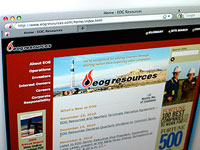

cnnpay8.jpgAverage total pay: $158,008
For: Engineer*
Best companies rank: 66


When this Houston-based oil and gas company celebrated its 10th anniversary in 2009, all the men who work there received a pewter belt buckle with a drilling rig design, while women received a sterling silver pendant with 10 tiffany-cut cubic zirconia stones.


Even better than bling, EOG has not had a layoff in its 10-year history. Every new hire gets stock options and benefits on their first day -- including a dollar-for-dollar 401(k) match up to 6% of salary, a money-purchase pension plan, and at least three weeks' vacation.


All employees, from "roughnecks" in the field to the chairman at headquarters, participate in the same benefit plan: EOG pays 100% of employees' health-care costs and covers 80% for their dependents (including domestic partners), with a plan that covers vision care, acupuncture, and other benefits.


 stone counter top,stone kitchen top

Wall Street rises on renewed earnings optimism

wholesale,buyer Global B2B buy sell website: www.bytrade.com


By Angela Moon


Traders work on the floor of the New York Stock Exchange early in the trading session in New YorkNEW YORK (Reuters) – Wall Street resumed its rally on Monday, led by natural resources and tech shares as investors saw stocks regaining momentum lost late last week.


A share-buyback from Dow component Intel helped revive optimism, which has been reinforced by more strong profit reports. Three-quarters of the 84 S&P 500 companies that have reported results so far in this earnings season have beaten analysts' estimates.


"Strong earnings are what's pushing the market higher and I don't see a correction in sight until the (earnings) season is over," said Keith Springer, president of Springer Financial Advisors in Sacramento, California.


"Even after the earnings, I don't think we will see a major correction but rather a pause or a breather since there isn't a major fundamental issue."


Volatility indicators in the options market also suggested a turnaround after the S&P's decline last week when the benchmark index fell after seven straight weeks of gains.


But trading volume was the lowest of the year at 7.02 billion shares traded on the New York Stock Exchange, the American Stock Exchange and Nasdaq. Last year's estimated daily average was 8.47 billion shares.


On Monday the Dow Jones industrial average (.DJI) ended up 108.68 points, or 0.92 percent, at 11,980.52. The Standard & Poor's 500 Index (.SPX) was up 7.49 points, or 0.58 percent, at 1,290.84. The Nasdaq Composite Index (.IXIC) was up 28.01 points, or 1.04 percent, at 2,717.55.


The blue-chip Dow neared the psychologically


important 12,000, pulled higher by natural resources stocks like Alcoa while the Nasdaq gained more than 1 percent on large-cap tech shares.


Shares of Alcoa Inc (AA.N) jumped 4 percent to $16.43 after its chief executive said he sees continued demand for aluminum in 2011.


The S&P materials sector (.GSPM) advanced 1 percent. Copper prices rose as concerns about a decrease in Chinese demand were replaced by worries over supply constraints.


Intel Corp (INTC.O) shares rose 2 percent to $21.24 after it raised its dividend by 15 percent and authorized another $10 billion for stock repurchases, a sign larger technology companies with slower growth may be looking for ways to reward investors.


The Credit Suisse Fear Barometer, a gauge for investor sentiment, hit a six-month high late last week and the CBOE Volatility Index (.VIX), a similar gauge, also jumped more than 10 percent from its lowest point over the past week.


"When we've seen a high CSFB (Credit Suisse Fear Barometer) and jumpy VIX in the past, it has usually meant a short-term rebound in the S&P," said Jason Goepfert of SentimenTrader in a report.


Chip-makers recovered from last week's fall with Nvidia Corp (NVDA.O) shares jumping 11.4 percent to $24.76 after Barron's said its stock could nearly double in price this year.


VMware Inc (VMW.N) shares were down 2.3 percent at $86.50 in extended trade, reversing earlier gains after the company reported after the bell that its quarterly profit rose sharply.


Shares of credit card company American Express (AXP.N) fell 1.4 percent to $45.15 and chipmaker Texas Instruments (TXN.N) slipped 1.8 percent to $34.02 in extended-hours trading after the companies reported results.


But shares of oilfield services company Halliburton Co (HAL.N) gained 1 percent to $39.55 in regular trading after reporting earnings.


J.C. Penney Co Inc (JCP.N) shares jumped 6.8 percent to $32.40 on news activist investor William Ackman will join the department store operator's board next month, heading off a potential fight over the direction of its turnaround.


Advancing stocks outnumbered declining ones on the NYSE by 2,114 to 882. On the Nasdaq, advancers beat decliners 1,721 to 939.


 stone kitchen top, marble tile

Report: Heart Disease Costs to Triple in U.S. by 2030

 B2B ,trade manufacturers , Global B2B buy sell website: www.bytrade.com


The costs of heart disease in the United States will triple between now and 2030, to more than $800 billion a year, a report commissioned by the American Heart Association predicted on Monday.


Treating high blood pressure will be the most expensive part of the cost, rising to $389 billion by 2030, the report projects, with overall heart disease rising by 10 percent by then.


The report is bad news for the United States, which already has the highest per capita healthcare costs in the developed world and is struggling to lower expenses. Last week the Republican-led House of Representatives voted to repeal President Barack Obama's healthcare reform, in part, they said, because it did not cut costs.


Dr. Paul Heidenreich of the VA Palo Alto Health Care System in California and colleagues looked at current costs of heart disease, the U.S. population and trends in behavior and illness for the first such projection of heart disease costs.


"Between 2010 and 2030, real total direct medical costs of cardiovascular disease are projected to triple, from $272.5 billion to $818.1 billion," reads the report, published in the journal Circulation.


"Annual costs directly attributable to hypertension are projected to increase $130.4 billion (in real 2008 dollars) in 2030 compared with 2010, for a total projected annual cost of $200.3 billion by 2030."


If high blood pressure as a risk factor for, say, stroke and kidney failure is factored in, the total cost of treating it will be $389 billion, the report said.


MOST HEART DISEASE PREVENTABLE


"The current study found that the prevalence of cardiovascular disease will increase by 10 percent over the next 20 years under status-quo cardiovascular disease prevention and treatment trends (ie, assuming no change to current policy), whereas the direct costs will increase almost three-fold," the report reads.


"By 2030, we estimate that 40 percent of U.S. adults, or 116 million people, will have one or more forms of cardiovascular disease."


Heart disease is the No. 1 cause of death in the United States and most other developed countries. It accounts for 17 percent of U.S. health spending.


"As the population ages, these costs are expected to increase substantially," the report said.
Healthcare spending grew to 17.6 percent of U.S. gross domestic product in 2009, from 16.6 percent the year before.


U.S. government data released this month show that spending on hospital services, doctor visits, medicines and other health needs rose 4 percent to $2.5 trillion in 2009.


Most heart disease is preventable with better diet and more exercise, according to the Heart Association. And many patients do not take their heart disease drugs as directed, or are not prescribed the optimal regimen, further raising costs.


One easy fix would be for Americans to eat less salt, the report recommended.


"A recent analysis using the Coronary Heart Disease Policy Model estimated that reducing dietary salt by 3 grams per day per person would reduce the annual number of new cases of (heart disease) by 60,000 to 120,000, stroke by 32,000 to 66,000, and myocardial infarction (heart attack) by 54,000 to 99,000 and reduce the annual number of deaths from any cause by 44,000 to 92,000," it noted.


 stone kitchen top, marble tile

Witness Says He Saw Man Carrying Flaming Suitcase in Russian Airport Before Blast

suppliers, wholesale Global B2B buy sell website: www.bytrade.com


Jan. 24, 2011: A suspected suicide bombing at Domodedovo airport in Moscow killed at least 35 people and wounded about 130, an airport spokesman said.A witness to the massive explosion that killed at least 35 people at Moscow's busiest airport Monday says he saw a man carrying a flaming suitcase seconds before the blast.


Artyom Zhilenkov, a 35-year-old driver, told The Associated Press he was just a few yards away from the explosion and saw a man who may have been the bomber.


"I saw the suitcase, the suitcase was on fire. So, either the man blew up something, or something went off on the man's body, or the suitcase went off." said Zhilenkov, whose clothes were soaked in blood. 


"The guy standing next to me was torn to pieces," he added.


Russian officials put the death toll at 31 and said nearly 170 people were injured in the explosion Monday afternoon, while an airport spokesman reported 35 dead and about 46 wounded.


"From the preliminary information we have it was a terror attack," President Dmitry Medvedev told officials. 


Russia's Interfax news agency reported that a head found at the site appears to belong to the bomber. 


"We found the head of a man of Arab appearance, aged 30-35. It seems he detonated the explosive device," said the source.


Amateur video posted on YouTube showed the  international arrivals terminal at Domodedovo Airport engulfed by smoke and splattered with body parts after the mid-afternoon terror attack sprayed shrapnel, screws and ball bearings at passengers and workers. Hundreds of people were in the loosely guarded area at the time.


Medvedev said the explosion demonstrated that security regulations had been breached and ordered Moscow police to beef up security at Moscow's two other commercial airports and other key transport facilities, including the subway system, the target of past terror attacks. 


He also postponed his planned Tuesday departure for the World Economic Forum in Davos, Switzerland, where he was to give the opening address on Wednesday.


Although there have been repeated attacks on the Moscow subway and on Russian trains -- most blamed on Chechen militants -- the bombing Monday was the first involving a Russian airport since 2004.


Sergei Lavochkin, who was waiting in the arrivals hall for a friend to arrive from Cuba, said he saw emergency teams carrying bloodied people out of the terminal.


"I heard a loud bang, saw plastic panels falling down from the ceiling and heard people screaming. Then people started running away," Lavochkin told Rossiya 24 television.


Mark Green, a British Airways passenger who had just arrived at the airport, told BBC television he heard the huge explosion as he was leaving the terminal.


"Literally, it shook you," he said. "As we were putting the bags in the car a lot of alarms ... were going off and people started flowing out of the terminal, some of whom were covered in blood."


"One gentleman had a pair of jeans on that was ripped and his thigh from his groin to his knee was covered in blood," he added.


Green said thousands of people were in the terminal at the time of the blast.


In Washington, President Obama condemned the "outrageous act of terrorism against the Russian people" and offered assistance to Russian investigators.


Mass transit targets are preferred by several groups, including the Chechen rebels who have hit the Moscow subway in the past.


Domodedovo is generally regarded as Moscow's most up-to-date airport, but its security procedures have been called into question.


In 2004, two suicide bombers were able to board planes at Domodedovo by buying tickets illegally from airport personnel. The bombers blew themselves up in mid-air, killing all 90 people aboard the two flights.


Built in 1964, Domodedovo is located 26 miles southeast of the center of Moscow and is the largest of the three major airports that serve the Russian capital, serving more than 22 million people last year.


Currently 77 airlines offer regular flights to Domodedovo, serving 241 international and national routes, according to the airport's website.


The airport insists that security is one of its top priorities, claiming on its website that its "cutting-edge operations technology guarantees the safety of passengers' and guests' lives."


Twin blasts in the subway last March killed 39 people and wounded more than 60 people.


Chechen rebel leader Doku Umarov claimed responsibility for that attack, warning Russian leaders that "the war is coming to their cities."


In December 2009, Chechen rebels claimed responsibility for blowing up a high-speed train between Moscow and St. Petersburg, an attack that killed 26 people and injured scores.


NATO Secretary-General Anders Fogh Rasmussen said he was "deeply disturbed" by the reported terror attacks.


"I strongly condemn it," he said on Twitter. "NATO and Russia stand together in the fight against terrorism."


 stone counter top,stone kitchen top

Six New Hacks That Will Make Your CSO Cringe


global business, B2B Global B2B buy sell website: www.bytrade.com


By Michael Gregg COO


Ever heard of Black Hat?


For those business professionals who haven’t heard of one of the world’s most important cybersecurity conferences, (it was held in D.C. last week, and will be held again in Las Vegas in August), they’d better start. Security conferences such as Black Hat, Defcon, and others are ground zero for the hacking community. These conferences are where new hacking threats and “zero day” exploits are revealed to the world before they wind up in our inboxes.


Black Hat is always an eye-opening experience. It boggles the mind to see all the new ways that the security community has discovered to break into businesses, computer networks, devices and private information.


Although there were over two dozen scary new threats unveiled at this year’s event in D.C., here are the six risks most pertinent for chief security officers, chief technology officers and anyone who is responsible for the security of a network:


•Fake Phone Networks: It is now possible for hackers to create fake phone networks for AT&T (NYSE:T) and T-Mobile devices. This is a potentially serious new security threat that could impact up to 90% of all cell phone users worldwide. This new attack, presented by Ralf-Philipp Weinmann, exploits a GSM cellphone or smartphone’s “


Hacking Your Phone to Hack Your Computer: For the past two years, security experts, including myself, have warned about the looming risks to smartphones. Because these devices are essentially “mini-computers,” they have become an important new attack vector for criminals and professional hackers. 


One of the latest threats is particularly deadly--it first hacks the victim’s smartphone, then infects the person’s computer as soon as they connect the two via a USB cord. These attacks could be used to spread malicious codes or steal sensitive data. The research was presented by Angelos Stavrou and Zhaohui Wang from George Mason University.


•Denial of Service Against Your Desktop: Most business professionals know what a denial of service (DoS) attack is, particularly following the Wikileaks “Operation Payback” attacks. A DoS attack overwhelms a Web site with traffic so that no one else can use it. Well, now imagine how this would affect the average business if hackers did the same thing for applications.


Imagine the disruption to business operations if hackers could shut down applications like Outlook, Word, Adobe Reader and more. Researchers Tom Brennan and Ryan Barnett revealed that this type of attack is possible for Web-based applications, and it might also work for applications that rely on a Web-interface.


•Cloud-Based Warfare: We are still in the early stages of harnessing the economic and technological potential of “the cloud," but it is already becoming clear that the cloud will be a power not just for good, but also for evil.


On the one hand, the cloud lets businesses benefit from better Web-based services, it also enables researchers to harness the computational power of a shared network of computers to solve massive algorithms. But researcher Thomas Roth has discovered that this same computational power can now also be harnessed by criminals to hack simple password algorithms for such things as Wi-Fi networks, Intranets, e-mail, etc.


• Breaking Open Your Android Phone: As a further reminder that smartphones aren’t immune to hackers, researcher Itzhak Avraham found a new way to hack Android devices. 


Since Google is now positioning Android devices for the enterprise market, this news should be of interest to the business community. According to Avraham’s research, attackers can exploit holes in a widely used Android application to take control of these smartphones.


•Stealing Corporate Secrets Through Weak Systems: Hackers can steal sensitive information from businesses by attacking systems that are assumed to be protected.


For example: Customer Relationship Management (CRM), Supplier Relationship Management (SRM) and Enterprise Resource Planning (ERP) systems, which typically have low-levels of security and are attached and trusted by other secure systems like SCADA and banking workstations. The research was presented by Val Smith and Alexander Polyakov.


Digital security is a constantly evolving field. New risks emerge almost daily and systems that were once secure are regularly undermined by newly discovered backdoors, programming flaws and creative attacks. It’s critical for the business world to stay abreast of these developments, before they are used to target enterprise networks, corporate databases and even individual smartphones.


marble tile, granite tile, stone carving

5 Money-Saving Tips - How to Choose a Car That is Cheap to Insure

B2B ,trade ,buy and sell Global B2B buy sell website: www.bytrade.com


By Tom Tenant


When you walk on to a car lot or begin searching for a new vehicle, the last thing on your mind may be the cost of auto insurance. However, the cost of car insurance should be one of the key factors you consider when you purchase a new car. 


According to Forbes.com, automobile insurance accounts for nearly 11% of total car ownership costs over a five year period--more than $2,000 on a $20,000 car.


If you're a cost-conscious driver who wants a great car and a low auto insurance bill, here are some tips on how to choose a car that may be cheap to insure.


 •Older cars with lower value. New cars almost always carry a higher premium than older models. For car insurance companies the more expensive a car is to buy, the more expensive it will be to replace or repair. Therefore, the higher the price tag of your car, the more you're likely to pay in insurance costs.


Safety record and features. The safer the car, the less likely you are to crash and file a claim. Choose a vehicle with a great crash-test score (a five-star rating from the National Highway Traffic Safety Administration) that's also loaded with safety features. In terms of big savings, anti-lock brakes top the list. Some states even require car insurance companies to provide discounts for cars equipped with them.


Theft rate. If you drive a car that thieves love to steal, you're going to pay higher premiums. In case you were curious, the Cadillac Escalade is the most stolen vehicle--and has been since 2002, according to the Highway Data Loss Institute. Ten out of every 1,000 Escalades are stolen, broken into or stripped for parts.


Performance and luxury. A high-performance car with a powerful engine is a clear signal to most automobile insurance companies that you drive fast and furious. That's why the Nissan GT-R sports car is one of the most expensive autos to insure, and the Mazda Tribute family SUV is one of the least expensive.


Size matters. Cars tend to command higher auto insurance rates than trucks and vans because they often have higher rates of injury and a greater number of insurance claims, according to the Insurance Institute for Highway Safety. Think about it. When an Escalade and Prius are involved in a crash, which one do you think will sustain the most damage?


If getting cheap car insurance is a priority to you, follow these simple tips while shopping for a new car and you can rest assured you'll get the cheapest car insurance possible.  Make sure you shop around and compare different car insurance quotes to ensure that you get the best deal on cheap auto insurance. You could save yourself hundreds of dollars on car insurance.


 sellingpurchase ,marketplace

2011年1月23日星期日

9 Reasons 2011 Will Cost More Money

importers ,manufacturer Global B2B buy sell website: www.bytrade.com


by Jill Krasny


provided by
ms_logo.gif


If you thought 2010 was the worst of the recession, think again—while no one knows exactly what 2011 has in store, it's fair to speculate that it will be a costly year for consumers. From travel to health care to gas, MainStreet ticks off the list of reasons why 2011 will make a bigger dent on your wallet than 2010.


Health Care


Prospective retirees probably weren't happy to hear this soundbyte from the Employee Benefit Research Institute (EBRI) in December: The cost of health care in retirement exceeds $200,000 in many cases. As Brian O'Connell writes, the "EBRI says that there's really no way to avoid saving for added health care costs, given the economic terrain now and in the future 'because employers are continuing to scale back retiree health benefits.'" Most aging Americans don't get employee-sponsored coverage anyway (only 20% really do), and EBRI estimated that both men and women would need a nest egg anywhere between $111,000 to $406,000 to cover their future health care expenses. With so much to pay for, it's no wonder so many Americans are waiting to retire.


Deflation


Three economists, one psychic and a Coke Bottle app can't be wrong: Deflation's going to have a huge impact on consumer spending and saving next year.


"Retailers will remain reluctant to raise prices," says Mark Lieberman, a private economic consultant and former senior economist for Fox Business Network. And as MainStreet's Jeff Brown wrote in October, "company revenues and profits then fall, causing employers to lay off workers. The unemployed, or those who worry they might soon be, spend less, perpetuating the downward spiral."


Consumers will also likely be reluctant to invest in long-term commitments like mortgages or personal loans.


"The most hard hit in this scenario are borrowers who must continue making payments while their incomes fall and their assets, such as homes lose value," says Brown.


Consumer Price Index


We've already discussed the risks of deflation for loan borrowers, but consumers could feel the impact as well. As Jeanine Skowronski reported back in November, "falling prices can actually hurt an already shaky economy by actually discouraging spending as consumers wait for prices to fall even lower." That's a recipe for a toxic cocktail of massive layoffs, company cutbacks and a possible double-dip recession.


Mortgage Rates


If interest rates shoot up the way economists and market experts expect them to, mortgage shoppers won't be pleased. As Jeff Brown wrote earlier this month, the current "rates are still so low there's a better chance they'll go up than down," and "while [home shoppers] might get a cheaper mortgage today than in six or eight months, the housing market is still pretty risky. Prices are continuing to fall … so a home bought today could be worth less later." Of course, whether buying a home makes sense depends entirely on the local market. Remember to do your homework.


Checking


Bank of America (NYSE: BAC - News) dropped its free checking this year and thanks to financial reform, more big banks could follow suit. To avoid the extra charges but still receive solid service, follow Brian O'Connell's tips to survive the demise of free checking.


Home Prices


No one was surprised by October 2010's news that home prices had weakened, but fears of a double-dip recession remain palpable. Experts predict another drop in U.S. home prices, while some are speculating that the market won't regain its footing until 2014. Thanks to the "human emotion" factor, writes O'Connell, "homeowners slide from caution to euphoria (and back again)," and "now with the credit spigots tightened and Americans in full retrenchment mode, there's no impetus to spend the kind of money to drive the economy forward … lack of demand for big-ticket items (like a new home) keeps housing prices low."


Auto Loans


Lenders might be loosening their tight grip on cash for auto loans, but that doesn't mean those loans will cost any less in 2011. Interest rates are set to rise and with that comes larger fees down the line. Now might be the time to consider refinancing if you already have a loan.


Gas Prices


The high cost of gas didn't deter Americans from their annual holiday shopping spree, but next year it might. As reported on our sister site, TheStreet.com, "Over the course of the calendar year the price has increased a relatively modest 13%; however, some analysts are concerned that prices have jumped almost 30% since September which could fuel inflation and impede further global economic growth."


Travel


The airlines will hate us for this, but it's true. Until a sweeping package of consumer rights is passed, there's just no getting around the stupid baggage, peanut, leg room, headphone, blanket, carry-on and coach fees they love to charge.


 stone kitchen top, marble tile


article source :http://finance.yahoo.com/banking-budgeting/article/111716/9-reasons-2011-will-cost-more 

7 Spectacular Career Comebacks

B2B ,trade Global B2B buy sell website: www.bytrade.com


by Suzanne Lucas

provided by
bnet_170x33.jpg


When I wrote about wealthy and famous people who had spectacular career comebacks, several people asked, "But what about us normal humans? Those of us who don't have millions of dollars to help us through?" Well, I asked my readers and got numerous fabulous responses. Here are the stories of people who had neither fame nor fortune, but were able to overcome great odds.


Patti Schuler: From Corporate to Cakes


Patti worked for a major pharmaceutical company for 9 years in various HR functions. Unfortunately, when her company was acquired by another, her job ended up on the chopping block, but not until she'd laid off many of her coworkers. "In my job as severance administrator, I witnessed first hand as thousands of people in the country were laid off in just over a year — and so many of them are so talented you can't believe they'd let them get away! I personally spoke to at least 1,000 of those people, and I made it a point to treat them with respect and care until the very end."


After handing herself a severance package, she turned her hobby into a business: Patti Cake Bakers. She makes custom cakes in suburban Philadelphia and has more time for her family, working on her own terms. She says, "I may not ever be the next Cake Boss, but this sure beats staring at spreadsheets all day!"


Maura Mather Järve: From Fired to Silver Lining


When Maura finished art school she says she "wasn't mature enough to realize that I controlled my own destiny." She took corporate jobs, which helped pay the bills, but didn't give her the creative control she wanted. While on maternity leave, her company laid her off. "At first, I wanted to sue somebody, but the severance package let me extend my maternity leave by a few months, and for that I am forever grateful."


She landed a new job that fit more with her creativity, but didn't last, as the recession forced a second layoff. This time, instead of looking for a new job, she saw the unemployment as a silver lining and started her own business, Majäbra Creative Partners. "Two years later, I'm proud to say that my business is growing, and I love my job. Plus, I can't get fired. So in retrospect, I've got nothing bad to say about being let go. In fact, I should probably send a few thank-you notes."


Darrin Lythgoe: From Gynecology to Genealogy


When Darrin graduated from college in 1992, with a degree in communications, he was desperate for a job. Luckily he found one, in Los Angeles, far away from home. Unfortunately, the job was editing tapes of gynecology lectures for doctors to listen to. He writes, "I was not married. I had only one sister. Plus, in high school I intentionally took accounting so I could avoid anatomy & physiology. Basically, I knew nothing about this topic, and now I was supposed to educate doctors!" He lasted 4 months, at which point he found a job back home doing computer programming—something he'd given up long before.


But, then this thing called the internet materialized. Darrin taught himself HTML, developed a website for the company he worked for, and began freelancing. He'd done genealogy as a hobby for a while and in 2002 developed a revolutionary new way to host family trees on the internet. He wrote The Next Generation, which became the "Cadillac" of online genealogy software. Now with 10,000 users, and translation into 20 languages, he says, "Life is pretty great."


Meredith Lines: From Fitness to A Healthy Job


Meredith, at 24, managed a department of a large fitness center. Her P&L and customer satisfaction stats were the best in the state. However, the company had a reputation for discriminating, and Meredith was called upon to testify at a discrimination hearing for a former employee. Rather than spouting the company line, she "testified under oath about the racist name-calling that takes place, amongst other things." A mere three hours later, she was fired.


While friends and family asked why she didn't sue, Meredith realized what she really wanted was a job she loved. She threw herself into looking for a new job and, she writes, "I succeeded! 6 weeks after my termination, I was hired by a company that is known for respecting and valuing its employees. It is quite a career shift, but I am so OK with that ... I have never been happier! I have been able to re-evaluate and figure out exactly what I wanted to with my life, and with my career."


Paul Owen: From Orphan to Professor


Paul's father died when Paul was 5; his mother died when he was 13. Paul said, "From the years 1983-1988 I moved around among three states, seven foster homes, and a group home for wards of the state. I suffered from insecurity, instability, abuse and emotional neglect. Not an ideal start." He had, though, enough insight to know he needed more education.


School and religion provided Paul the opportunity to stabilize his life. He said, "In school, I found a niche in research and academia, which led to further graduate and doctoral studies. If I had not stayed in school, I could well have ended up homeless, as foster kids don't have many options once they turn 18."


Paul is now a tenured professor at Montreat College in North Carolina, teaching Greek and biblical studies. He also published his memoirs, "The Long Winter: One Man's Journey Through the Darkness of Foster Care," this summer.


Jim Grey: From Rotten Boss to Perfect Career


Jim's VP wanted to surround himself with people just like him—and unfortunately Jim wasn't like the VP. Even though his work was top notch and clients loved him, the VP wanted him gone and gave him 30 days notice and instructions not to tell the client. However, on day 30, when the client kept talking about scheduling future meetings, Jim broke and told them that he had been terminated and today was his last day.


As expected the VP was furious over this "breech." However, the client was even more furious. Unknown to Jim, there was a clause in the contract that prevented the company from firing him without cause—the client liked him and a few other managers so much they'd requested it. Jim said "I'm sure that the boss's plan was to wait until I was gone and then just tell our government contacts that I'd decided to pursue other opportunities."


With the boss bound by contract to keep Jim on board, he still tried to destroy him by moving him into a different position. Jim only accepted the new position because his family circumstances made job hunting impractical at the time. To his delight, he learned new skills there which allowed him to branch into a new area—one that he loves. " I'm at the top of my career today, and I would never have been able to do it unless I'd been fired."


Jane Doe: From Managing a Nightmare to Fortune 100


(Jane asked to remain anonymous, but wanted to share her story.) At 26 she was hired into what sounded like her dream job—as the managing editor for a small publisher. However, it was more like a nightmare. "Despite the title managing editor," she writes, "the only thing I had any control over was the organization of the paperclips in my desk."


The stress became unbearable, causing physical problems and, according to friends, a personality change. Then the boss found out that she was only 26 and therefore "too young" to be a managing editor. The stated reason for her termination was that she was "too creative."


To make ends meet, she took a temp job, which turned into a real job at a Fortune 100 company. Even though you would think a big company would not appreciate creativity, Jane's skills and talents were recognized and put to good use. And as for the publishing company? Within 90 days, her replacement and her staff had all been fired or quit as well. Apparently it was nobody's dream.


 buying, sellingpurchase ,marketplace


article source : http://finance.yahoo.com/career-work/article/111701/7-spectacular-career-comebacks-from-real-people


Tea partiers say defense in mix for budget cuts

 wholesale,buyer,seller Global B2B buy sell website: www.bytrade.com


By DONNA CASSATA


Mark Meckler, JennyBeth MartinWASHINGTON – Back home, tea partiers clamoring for the debt-ridden government to slash spending say nothing should be off limits. Tea party-backed lawmakers echo that argument, and they're not exempting the military's multibillion-dollar budget in a time of war.


That demand is creating hard choices for the newest members of Congress, especially Republicans who owe their elections and solid House majority to the influential grass-roots movement. Cutting defense and canceling weapons could mean deep spending reductions and high marks from tea partiers as the nation wrestles with a $1.3 trillion deficit. Yet it also could jeopardize thousands of jobs when unemployment is running high.


Proponents of the cuts could face criticism that they're trying to weaken national security in a post-Sept. 11 world.


House Republican leaders specifically exempted defense, homeland security and veterans' programs from spending cuts in their party's "Pledge to America" campaign manifesto last fall. But the House's new majority leader, Rep. Eric Cantor, R-Va., has said defense programs could join others on the cutting board.


The defense budget is about $700 billion annually. Few in Congress have been willing to make cuts as U.S. troops fight in Afghanistan and finish the operation in Iraq.


Defense Secretary Robert Gates, in a recent pre-emptive move, proposed $78 billion in spending cuts and an additional $100 billion in cost-saving moves. While that amounts to $13 billion less than the Pentagon wanted to spend in the coming year, it still stands as 3 percent growth after inflation is taken into account.


That's why tea party groups say if the government is going to cut spending, the military's budget needs to be part of the mix.


"The widely held sentiment among Tea Party Patriot members is that every item in the budget, including military spending and foreign aid, must be on the table," said Mark Meckler, co-founder of the Tea Party Patriots. "It is time to get serious about preserving the country for our posterity. The mentality that certain programs are 'off the table' must be taken off the table."


Former House Majority Leader Dick Armey and Matt Kibbe, leaders of the group FreedomWorks, recently wrote in a Wall Street Journal editorial that "defense spending should not be exempt from scrutiny." On Gates' proposed savings of $145 billion over five years, they said, "That's a start."


Just about all Republicans — and plenty of Democrats, too — favor paring back spending. But when it comes to specific cuts — eliminating money for schools, parks, hospitals, highways and everything else — the decisions get difficult. Every government expenditure has its advocate and no one wants his or her program cut.


Fault lines have emerged within the Republican ranks over how deep to cut and where to whittle. In the coming weeks, lawmakers will feel the pressure from constituents and colleagues.


"Everything is ultimately on the table," said Rep. Jon Runyan of New Jersey, a freshman Republican and a tea party favorite.


That view could produce a rough tenure for the 6-foot-7 former football player, who just earned a coveted spot on the House Armed Services Committee, a fierce protector of military interests. The congressman's district is home to Fort Dix, which merged with neighboring McGuire Air Force Base and Lakehurst Naval Air Engineering Station to make the military's first three-branch base.


Runyan expects a committee fight over Gates' proposal to cancel a $14 billion program to develop the Expeditionary Fighting Vehicle for the Marines and use that money to buy additional ships, F-18 jets and new electronic jammers. Already, several members of the panel, including the chairman, Rep. Buck McKeon, R-Calif., have signaled they will challenge Gates' move.


Runyan says he will decide after he's heard arguments from both sides.


No matter how much defense spending is trimmed, none of the cuts is likely to reduce the money that's available to the military to spend on the war fronts.


"We want to make sure men and women put in harm's way have the resources they need," said Sen. Pat Toomey, R-Pa., who recently traveled to Afghanistan and Pakistan with several of his GOP colleagues, including a number of other freshmen. "That doesn't mean the entire defense budget has to be taken off the table," he added.


Kentucky Sen. Mitch McConnell, the top Republican in the Senate, said he didn't think "anything ought to be off-limits for the effort to reduce spending." He told "Fox News Sunday" that "I don't think we ought to start out with the notion that a whole lot of areas in the budget are exempt from reducing spending, which is what we really need to do and do it quickly."


Rep. Kevin Brady, R-Texas, has proposed cutting total government spending by $153 billion, including deep reductions in defense and elimination of several weapons programs. Brady called it a "down payment" on getting the country's finances in order.


In an unusual political pairing, liberal Rep. Barney Frank, D-Mass., and Rep. Ron Paul of Texas, a libertarian and former Republican presidential candidate, have joined forces in pushing for substantial reductions in the defense budget, including closing some of the 600-plus military bases overseas.


"I'll work with anybody," Frank said of the effort, which could attract other liberal Democrats who have tried for years to reduce post-Cold War military spending and tea party-backed Republicans.


The schism within the GOP is philosophical as well as generational. Paul's son, Sen. Rand Paul of Kentucky, 48, a tea party favorite, says all spending should come under scrutiny, from food stamps to foreign aid to money for wars. Sen. John McCain, R-Ariz., 74, a decorated Vietnam War veteran, worries about the rise of protectionism and isolationism in the Republican Party.


For all the talk, one tea party group is willing to give lawmakers some leeway, provided that they adhere to the movement's values.


Sal Russo, chief strategist of the Tea Party Express, said the defense budget should be part of the calculation and his organization expects lawmakers to "responsibly bring spending down." He added that his group will give them "flexibility to do their job."


Tea party-backed Rep. Tim Scott, R-S.C., said lawmakers "at the end of the day, will take a look at all the fat in the budget." But he said it was premature with two wars to say how Congress will make the cuts. Scott has two brothers in the military — one in the Air Force, the other in the Army.


 stone counter top,stone kitchen top

Porn Star Dies After Sixth Breast Surgery

purchase ,marketplace Global B2B buy sell website: www.bytrade.com


A German porn actress suffered a fatal heart attack following her sixth breast augmentation operation, leading to a police investigation.


"Sexy Cora," a 23-year-old porn actress and former Big Brother reality television star was in a coma for nine days after complications during the operation to increase her breast size from an F to a G cup, according to German media reports Friday.


She died Thursday at the Hamburg University Hospital, leading to an investigation into the Hamburg plastic surgery clinic where she received the breast operation.


"The brain damage was too great. Her blood pressure dropped steadily, physiological functions gave out ... then she went to sleep quietly," husband Tim Wosnitza told the German newspaper Bild.


German police are investigating the 54-year-old anesthesiologist and the 49-year-old surgeon who performed the operation on suspicion of negligent homicide.


Stern magazine said Sexy Cora's death also raised serious questions for the TV executives who seek out wannabe stars prepared to go under the knife for their art, saying the case "casts a harsh light on the trash industry.


"How far are private television and the stars of reality TV prepared to go in order to gain attention for themselves and their bodies? What dangers are they taking on?"


Cora appeared in the tenth season of the German edition of Big Brother last year, and received a "Best Amateur 2010" award at the Venus erotic industry trade fair.


 suppliers, wholesale,buyer,seller